
The Day I Learned About Cathead Biscuits
The first time I heard the name “cathead biscuits,” I laughed out loud. I thought someone was joking. My grandmother just smiled and said, “You’ll see when you make them.” These biscuits are called cathead because they are as big as a cat’s head. That is the honest truth. They are round, fluffy, and so tender they almost fall apart in your hands. I still laugh at that silly name every time I pull a batch from the oven. Doesn’t that smell amazing? The ginger and cinnamon fill up your whole kitchen. Tell me, have you ever made a biscuit bigger than your fist?Why Gingerbread Belongs in Your Biscuit
Most people think of gingerbread as a cookie or a cake. But I say gingerbread belongs in a warm, buttery biscuit too. The molasses makes it dark and sweet. The ground ginger gives it a gentle kick. Here is why this matters: molasses is full of iron and calcium. It adds richness without being too sugary. And ginger is a natural helper for upset tummies. So you are eating something cozy that also makes you feel good. *Fun fact: Molasses was once called “long sugar” because sailors took it on long voyages. It never spoiled. Isn’t that something?*My Little Kitchen Mistake
One year, I forgot to add the baking powder. My biscuits came out flat as pancakes. My husband said, “Well, at least you made gingerbread crackers.” We ate them anyway, laughing the whole time. That day taught me something important. Baking powder is not optional. It is what makes these biscuits rise high and soft. Never skip it. And always check your pantry before you start. Do you have a funny kitchen mistake? I would love to hear about it. Share it with me the next time we talk.The Secret to Pea-Sized Butter
When you mix the butter into the flour, you want pieces the size of small peas. Not bigger, not smaller. This is the trick to a biscuit that is flaky on the inside. Here is why this matters: When the butter melts in the hot oven, it creates little pockets of steam. Those pockets make the biscuit light and layered. If you mix the butter in too much, you lose those pockets. The biscuit becomes dense and heavy. Use your fingers if you are brave. The warmth of your hands does the job quickly. Or use a pastry cutter if you want to stay cool. Either way, keep those butter bits chunky.Crystallized Ginger Is a Tiny Treasure
You might wonder why I add crystallized ginger to the dough. It is not just for looks. Those little chewy bits burst with sweet heat when you bite into them. They are like little surprises hiding inside the biscuit. Crystallized ginger is ginger that has been cooked in sugar and dried. You can find it in the baking aisle or near the spices. If you cannot find it, you can leave it out. But I think it makes the biscuit extra special. Quick poll for you: Do you like chewy bits in your baked goods, or do you prefer them smooth? I am curious.The Orange Zest Trick
A little orange zest feels like a secret whisper in this recipe. You barely taste it, but it brightens up all the warm spices. It makes the gingerbread taste fresher and more alive. I learned this from a neighbor who grew oranges in her backyard. She said, “Citrus wakes up winter baking.” She was right. Just one teaspoon of zest changes everything. If you do not have a fresh orange, you can skip it. But try it once. You will be surprised. Here is another reader question: What is your favorite way to use orange in baking? I would love to add your idea to my recipe box.Soft Edges or Crispy Sides, You Choose
This recipe gives you a choice. Bake the biscuits on a parchment-lined sheet, and you get crispy golden edges all around. Bake them in a buttered cast-iron skillet, and the sides stay soft and pillowy. I prefer the skillet method. The biscuits crowd together and push up against each other. That is how you get those tender, pull-apart sides. My children always fought over the middle biscuit because it was the softest. Whether you pick crispy or soft, brush them with melted butter and sprinkle sugar on top. That buttery sugar crust is the best part. So tell me, which do you choose: crispy edges or soft sides? I promise not to judge.Ingredients:
| Ingredient | Amount | Notes |
|---|---|---|
| All-purpose flour (or 1.1 GF flour) | 3 cups | |
| Light brown sugar | ⅓ cup | |
| Baking powder | 2 tbsp | |
| Kosher salt | 1 tsp | |
| Ground cinnamon | 1 tsp | |
| Ground ginger | 2½ tsp | |
| Allspice | 1 tsp | |
| Ground cloves | ½ tsp | |
| Unsalted butter | ¾ cup | |
| Buttermilk or unflavored kefir | 1⅓ cups | |
| Crystallized ginger, finely chopped | ½ cup | |
| Molasses | ½ cup | |
| Orange zest | 1 tsp | |
| Granulated sugar (for sprinkling) | For topping | |
| Melted butter | ¼ cup | For topping |
Why These Gingerbread Cathead Biscuits Make Me Smile
I learned to make cathead biscuits from my grandmother, all those years ago. She’d plop the dough down like a cat’s head—hence the silly name. I still laugh at that every time I make a batch. These gingerbread ones are extra special because they smell like Christmas morning. Doesn’t that smell amazing when the spices hit the air?
The secret is the crystallized ginger hiding inside each one. It gives a little chewy surprise in every bite. I love how the orange zest wakes up all those warm spices. What’s your favorite winter spice—cinnamon, ginger, or cloves? Share below! Now let’s get those oven mitts ready and bake some memories.
Let’s Make These Soft Spiced Biscuits Together
Step 1: Preheat your oven to 400 degrees. Line a baking sheet with parchment paper, or butter a 10-inch cast iron skillet for extra soft edges. I prefer the skillet because it gives the biscuits a cozy hug from all sides. (Hard-learned tip: Don’t skip the parchment if using a sheet—sticking biscuits are sad biscuits.)
Step 2: In a big mixing bowl, whisk together 3 cups all purpose flour, ⅓ cup light brown sugar, 2 tablespoons baking powder, 1 teaspoon salt, 1 teaspoon cinnamon, 2½ teaspoons ginger, 1 teaspoon allspice, and ½ teaspoon cloves. My kitchen smelled like a holiday candle shop when I did this last week.
Step 3: Cut ¾ cup cold butter into small cubes and drop it into the flour mixture. Use your fingers or a pastry cutter to work the butter in until you see pea-sized pieces. This is the part my grandkids love—they call it making crumbly sand.
Step 4: Pour in 1⅓ cups buttermilk (or unflavored kefir), ½ cup molasses, 1 teaspoon orange zest, and ½ cup finely chopped crystallized ginger. Stir gently until just combined—don’t overmix, or the biscuits will get tough. I once mixed too much and learned that the hard way.
Step 5: Use a 4-tablespoon scoop to drop even mounds of dough onto your pan or skillet. Space them about an inch apart so they have room to spread. Brush each one with ¼ cup of melted butter and sprinkle a little granulated sugar on top.
Step 6: Bake for 25 to 30 minutes, until they are golden brown and your whole house smells like a spice dream. Let them cool just a few minutes before pulling one apart. Do you like your biscuit with butter or jam first? Share below!
Cook Time: 25–30 minutes
Total Time: 45 minutes
Yield: 8 large biscuits
Category: Breakfast, Snack
Three Fun Twists to Try
Orange Cream Dream: Swap the crystallized ginger for ½ cup dried cranberries and add a teaspoon more orange zest. It tastes like a holiday sunrise.
Chocolate Ginger Hug: Fold in ½ cup mini chocolate chips with the crystallized ginger. The warm chocolate makes these biscuits feel like a cozy blanket.
Savory Maple Kick: Skip the molasses and use ½ cup maple syrup instead. Add ½ teaspoon black pepper for a sweet-and-spicy surprise. Which one would you try first? Comment below!
How to Serve and Sip These Beauties
Serve these biscuits warm with a pat of salted butter melting into the cracks. A dollop of vanilla yogurt or whipped cream makes them feel like dessert. For a cozy side, add a bowl of cinnamon applesauce or a mug of hot apple cider.
For grown-ups, a glass of dark rum or spiced bourbon pairs perfectly with the ginger. Kids love a tall glass of cold milk or a warm ginger tea. Which would you choose tonight?
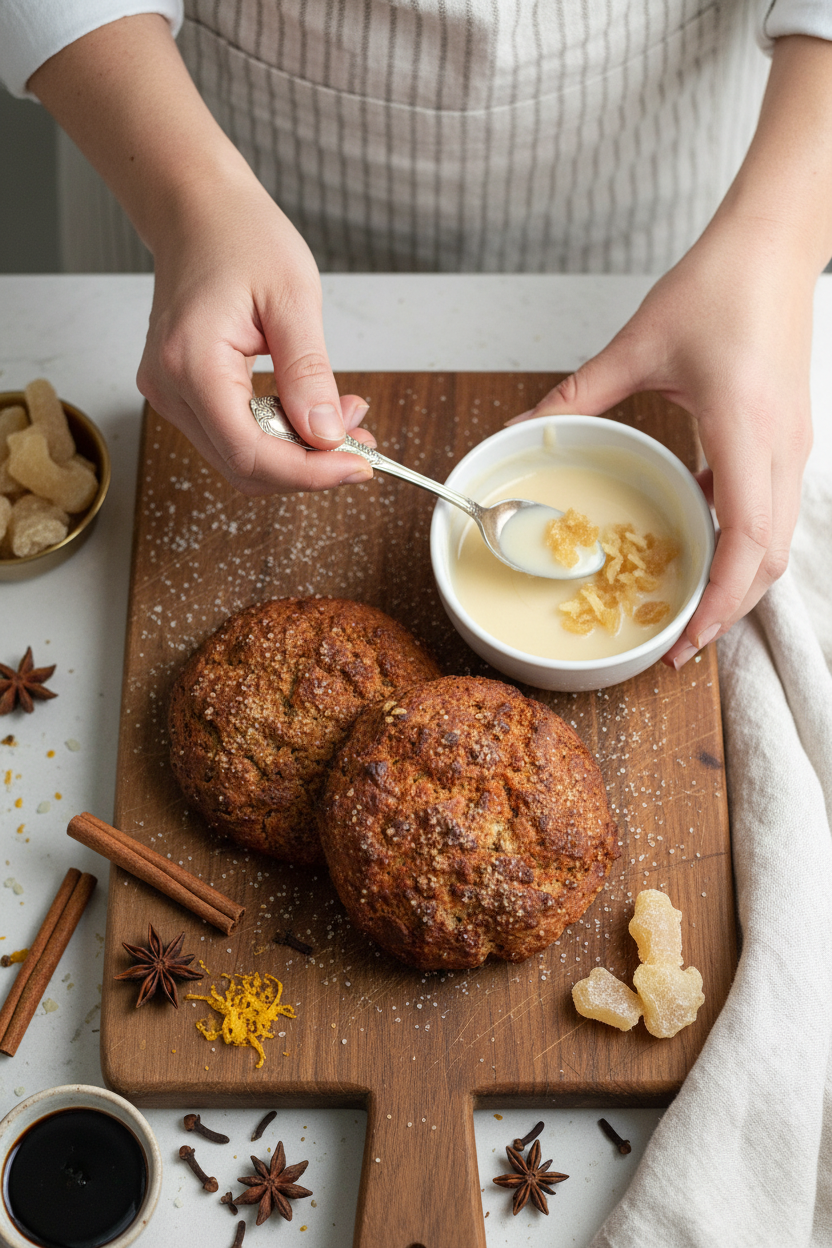
Storing and Reheating Your Gingerbread Biscuits
These biscuits are best the day you bake them. But leftovers are a real treat the next morning. Let them cool completely before storing.
Place them in an airtight container at room temperature. They will stay soft for two days. I once kept a batch in a tin on my counter, and my grandson ate one for breakfast with butter. He said it tasted like Christmas.
For longer storage, wrap each biscuit in plastic wrap. Pop them in a freezer bag. They will keep for up to three months. To reheat, just warm them in a 300-degree oven for ten minutes. This brings back the soft, spiced flavor.
Batch cooking is a lifesaver for busy weeks. Make a double batch and freeze half. Then you have warm biscuits ready for company or a cozy snack. Have you ever tried storing it this way? Share below!
Fun fact: The word “cathead” comes from the old Southern way of making biscuits as big as a cat’s head. They are meant to be rustic and generous.
Common Troubles and Easy Fixes
Sometimes biscuits come out too hard. This often happens if you overmix the dough. Mix just until the flour disappears. A few lumps are fine. Why this matters: Overworking the dough makes the gluten tough. You lose that tender, fluffy bite.
Another issue is biscuits spreading flat. This means the butter was too warm. Keep your butter cold and your hands cool. I remember when I first made these, I used melted butter by accident. The biscuits turned into pancakes! Now I always chill my butter first.
A third problem is bland flavor. Be sure to use fresh spices. Old cinnamon and ginger lose their punch. Why this matters: The warm spices are the heart of this recipe. Fresh ones make the biscuits taste like holiday magic. Which of these problems have you run into before?
Quick Kitchen Q&A
Q: Can I make these gluten-free?
A: Yes! Use 1.1 gluten-free flour blend. The texture will be a little more crumbly, but the flavor is just as good.
Q: Can I make the dough ahead?
A: Absolutely. Mix the dough, scoop it onto a tray, and refrigerate overnight. Bake fresh the next morning.
Q: What can I swap for buttermilk?
A: Use plain yogurt thinned with a little milk. Or add a tablespoon of lemon juice to regular milk and wait five minutes.
Q: Can I make half the recipe?
A: Yes. Just cut everything in half. Use one egg yolk if you need extra moisture.
Q: Can I skip the crystallized ginger?
A: You can, but you will lose some chewy sweetness. Try chopped dried apricots instead. Which tip will you try first?
A Warm Send-Off from Tessa
Thank you for spending time in my kitchen today. I hope these biscuits bring warmth to your table. They are perfect for a cold afternoon with a cup of tea.
I would love to see your baking. Snap a photo of your biscuits and share it. Have you tried this recipe? Tag us on Pinterest!
Remember, cooking is about joy and sharing. Don’t worry if your biscuits are not perfect. Every batch is a memory in the making.
Happy cooking!
—Tessa Hammond

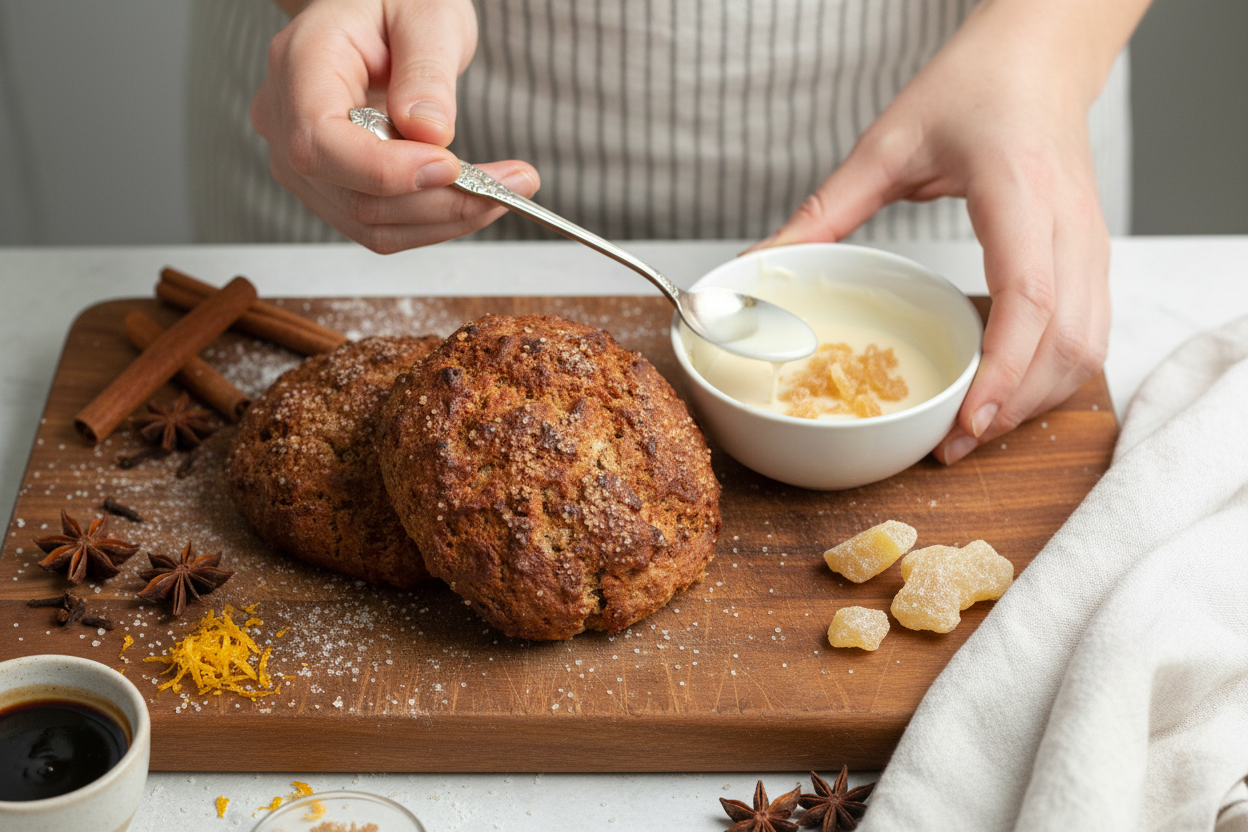
Soft Spiced Gingerbread Cathead Biscuits Recipe
Description
Soft spiced gingerbread cathead biscuits made with molasses, crystallized ginger, and warm spices.
Ingredients
Instructions
- Preheat oven to 400 degrees. Line a baking sheet with parchment paper, or butter a 10” skillet for softer edges.
- In a mixing bowl, combine all dry ingredients.
- Add the butter. Use your fingers or a pastry cutter to work it in until you have pea-sized pieces.
- Add the buttermilk (or kefir), molasses, orange zest and crystallized ginger. Mix until just incorporated — don’t overwork it.
- Using a 4 tbsp scoop, portion even mounds of dough onto the tray or into the skillet.
- Brush with melted butter and sprinkle the top with granulated sugar.
- Bake 25–30 minutes or until golden brown.
Notes
- For softer edges, use a buttered 10″ skillet instead of a baking sheet.

Leave a Reply