
My First Sauerkraut Surprise
I made my first sauerkraut over fifty years ago. I was so nervous. I thought I would ruin it. But it worked. I still laugh at that.
It taught me a wonderful lesson. Good food doesn’t need to be complicated. Sometimes, it just needs patience. This matters because it gives you confidence. You can make magic with just cabbage and salt.
Why We Salt and Squish
Let’s talk about that salt. You sprinkle it on the sliced cabbage. Then you wait. The salt pulls water right out of the leaves. This makes the brine, a salty juice.
Then you pound it a bit. Get those juices flowing. Doesn’t that smell amazing? That fresh, green smell is the start. The brine is the secret. It keeps the cabbage safe while it turns tangy.
The Quiet Waiting Game
Now comes the quiet part. You pack the cabbage into a jar. You press it down hard. You want all the air bubbles gone. Then you weigh it down under the brine.
You leave it on your counter. It needs a cozy spot, not too hot or cold. *Fun fact: The tiny microbes eating the sugar are what make the tang!* You will see little bubbles. That means it’s alive and working. This matters. It connects us to old ways of keeping food.
When Is It Ready?
You can taste it after a few days. Just use a clean fork. It gets more sour each day. I like mine at about two weeks. You might like it sooner.
That’s the fun part. You are the boss of the flavor. Once it tastes right to you, put it in the fridge. The cold slows everything down. It keeps for months. What’s your favorite food to eat with sauerkraut? I love it on a simple hot dog.
Your Turn to Try
Don’t be afraid. It’s just cabbage. The worst that can happen is you learn something. And the best? You get delicious kraut you made yourself.
Have you ever tried fermenting anything before? Tell me about it. If you try this, let me know how your first taste goes. I love hearing those stories. Happy fermenting, my dears.
Ingredients:
| Ingredient | Amount | Notes |
|---|---|---|
| Fresh green cabbage | 2 lbs | Choose firm, heavy heads |
| Sea salt or kosher salt | 3-4 tsp | Never use iodized salt |
How to Make Sauerkraut: Easy Homemade Sauerkraut Recipe Guide
Hello, my dear! It’s Tessa. Let’s make some sauerkraut together. It’s just cabbage and salt, really. But it turns into something magical. My own grandma taught me this. She’d say it was “putting the garden by.” I still laugh at that. We are just letting it sit and get tangy. Doesn’t that smell amazing when it’s working? Let’s begin.
Step 1: Get your cabbage ready. Cut it in half and take out the tough core. Then slice it very thin, like little ribbons. Put all those ribbons in your biggest bowl. Sprinkle the salt all over them. Now, just toss it with your hands. Let it sit for about 20 minutes. You’ll see it start to wilt. That’s the salt pulling out the water.
Step 2: Time to get your hands busy! Squeeze and pound that cabbage. You can use your fists or a wooden spoon. You want to see lots of juice in the bottom of the bowl. This juice is called brine. It will keep our kraut safe. (My hard-learned tip: really pound it well. More juice means a happier ferment!)
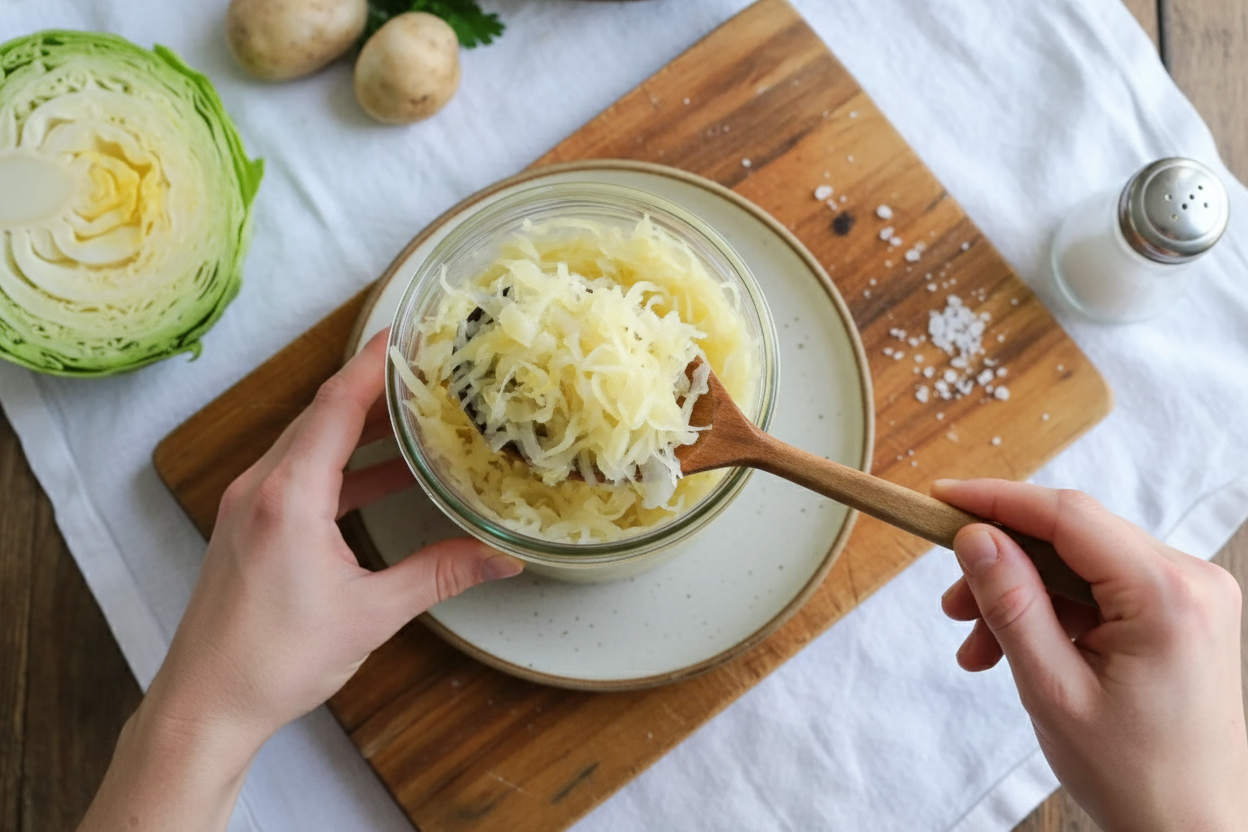
Step 3: Pack the cabbage into a clean jar. Do small handfuls at a time. Push it down hard after each handful. You want to squish out any air bubbles. Leave about two inches of space at the top. The brine should cover the cabbage. If it doesn’t, mix a little extra. Just stir one teaspoon of salt into a cup of water.
Step 4: We need to keep the cabbage under the brine. A small, clean jar filled with water makes a good weight. Place it right on top. Now screw the lid on, but not too tight. Just “fingertip tight.” This lets the bubbles escape. Why can’t we use iodized salt? Share below!
Step 5: Find a cool spot for your jar. A kitchen corner is perfect. Let it sit for 2 to 4 weeks. Open the lid for a second every day. This lets the gas out. You can taste a little after 4 days. See how the flavor changes! When it’s tangy enough for you, put it in the fridge. The cold slows everything down. Now you have homemade kraut!
Cook Time: 30 minutes active
Total Time: 2–4 weeks (fermenting)
Yield: 1 quart jar
Category: Fermentation, Condiment
Three Tasty Twists on Classic Kraut
Once you know the basic way, you can play! Adding just one extra thing makes it special. Here are my favorite simple twists. They make lovely gifts, too.
Caraway Kraut: Add two teaspoons of caraway seeds with the salt. It tastes just like my grandmother’s rye bread.
Apple Ginger Kraut: Mix in one grated apple and a tablespoon of grated fresh ginger. It’s sweet and zippy.
Confetti Kraut: Add a handful of shredded purple cabbage and a grated carrot. So pretty and colorful in the jar!
Which one would you try first? Comment below!
Serving Your Sauerkraut
Oh, the things you can do with kraut! It’s not just for hot dogs. Though it is wonderful on them. Try it on a grilled cheese sandwich for a tasty crunch. I love it piled on a baked potato with a dollop of sour cream. It’s also lovely with simple roasted sausages and potatoes.
For a drink, a cold lager beer pairs perfectly with that tangy flavor. If you’re not having beer, try sparkling apple cider. The bubbles and sweet apple are a happy match. Which would you choose tonight?
Keeping Your Sauerkraut Happy
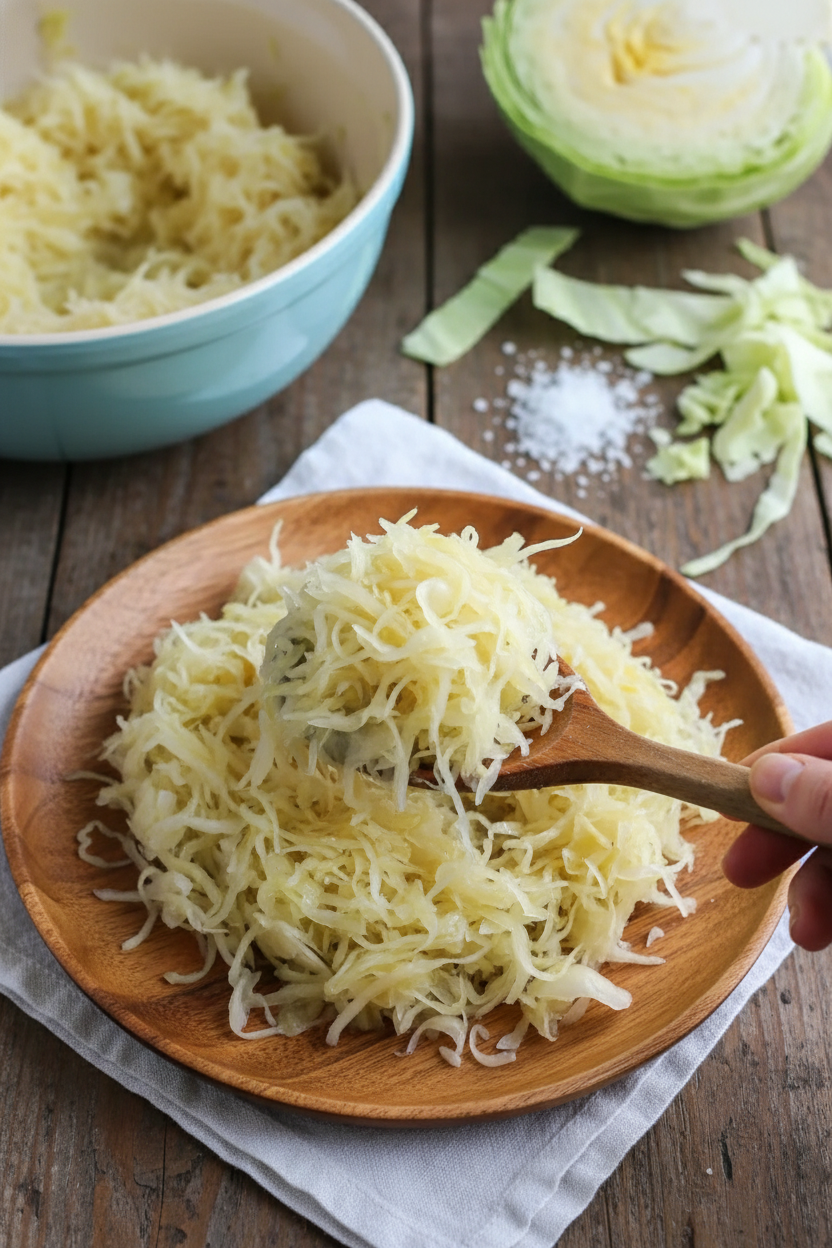
Your homemade sauerkraut needs a cozy home. Once it’s tangy, move it to the fridge. It will keep for six months or more. I keep mine in a big jar on the top shelf.
You can make a big batch all at once. It saves so much time later. Just pack it into smaller jars after fermenting. Then you have ready-to-go kraut for weeks.
My first batch ever filled my whole fridge! I learned to use smaller jars. Storing food well means less waste and more meals. It makes cooking feel simpler and smarter.
Have you ever tried storing it this way? Share below!
Simple Fixes for Common Kraut Questions
Is your cabbage not making enough juice? Just wait the full 20 minutes after salting. Then pound it firmly with a spoon. This helps the natural brine come out.
Seeing mold on top? Do not panic. Skim off any white or colorful spots. The kraut underneath is usually just fine. I once saw a pink spot and my heart sank!
Is your kraut not tangy enough? It likely needs more time. Taste it every few days after day four. Warmer rooms make it ferment faster.
Fixing small problems builds your cooking confidence. It also makes sure your food tastes its very best. Which of these problems have you run into before?
Your Sauerkraut Questions, Answered
Q: Is this recipe gluten-free?
A: Yes! Cabbage and salt are naturally gluten-free.
Q: Can I make it ahead?
A: Absolutely. Fermenting is the definition of making ahead!
Q: Can I use red cabbage?
A: You can. It makes a beautiful pink kraut. *Fun fact: It turns pink because of a natural color change!
Q: Can I double the recipe?
A: Yes, but use two jars. Do not cram one jar too full.
Q: Any optional tips?
A> Try adding a teaspoon of caraway seeds for a classic flavor. Which tip will you try first?
From My Kitchen to Yours
I hope you love making your own sauerkraut. It is a wonderful, living food. I feel so proud every time I open a jar.
I would love to see your creations. Share a picture of your jar on your kitchen counter. Have you tried this recipe? Tag us on Pinterest! Let’s fill the internet with homemade goodness.
Happy cooking!
—Tessa Hammond.

Easy Homemade Sauerkraut Recipe Guide
Description
Learn how to make classic, tangy sauerkraut at home with just cabbage and salt. A simple fermentation process yields delicious, probiotic-rich results.
Ingredients
Instructions
- Remove damaged leaves, cut cabbage in half, remove core, and slice thinly (1/8 inch).
- Place sliced cabbage in a large bowl, sprinkle with salt, toss, and let sit 20 minutes. Pound cabbage to release more juice.
- Pack cabbage into jar or crock in small handfuls, pressing down to remove air pockets. Fill about two-thirds full.
- If cabbage isn’t fully submerged, create supplemental brine (1 tsp salt in 1 cup water) and pour over cabbage.
- Place a weight on top of the cabbage to keep submerged. Screw lid fingertip tight to allow gas escape.
- Ferment at 65-70°F for 2-4 weeks. Taste starting day 4 to check tanginess. Open lid daily to release CO2.
- Once desired tanginess is reached, remove weights, screw lid tightly, and store in refrigerator. Keeps 6 months or longer.
Notes
- Ensure all tools and jars are very clean. The cabbage must stay submerged under the brine to prevent mold. If mold appears on the surface, skim it off; the sauerkraut beneath is usually fine.



Leave a Reply