
My First Brisket Adventure
Let me tell you about my first brisket. I was so nervous. I checked that smoker every ten minutes. I still laugh at that.
The meat turned out a bit dry. But the flavor was still there. That taught me a big lesson. Good food is about the trying, not just the perfect result. That matters more than you think.
Why We Cook Low and Slow
Brisket is a tough piece of meat. It needs gentle heat and lots of time. This melts the hard parts into juicy tenderness.
It’s like a good friendship. You can’t rush it. You just have to be patient and kind. The reward is so worth the wait. Doesn’t that smell amazing when it’s finally ready?
The Magic of a Simple Rub
You don’t need a fancy rub. Salt and pepper are the heroes here. The other spices just give them a little hug.
Press that rub right into the meat. Let it sit for a bit before cooking. This helps the flavors say hello to each other. What’s your favorite spice to smell when you’re cooking?
*Fun fact: That black pepper and paprika create a beautiful dark crust called “bark.” It’s the tastiest part!
The Secret is in the Rest
This is the hardest step. You take the meat out. It looks perfect. But you must walk away. Let it rest for a whole hour.
Why does this matter? All the juices inside are running wild from the heat. Resting lets them settle back in. If you cut it right away, all that good flavor runs out onto the cutting board. Trust me on this.
Slicing and Serving Your Masterpiece
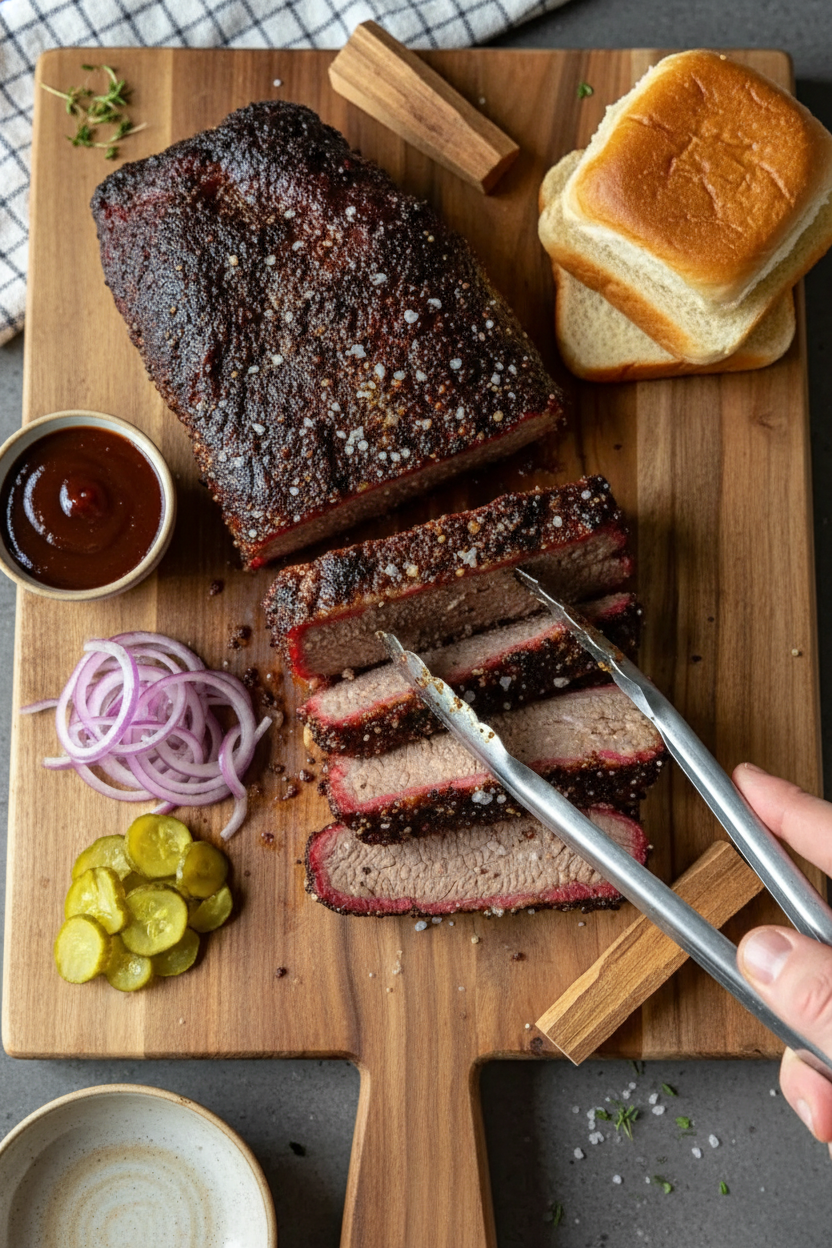
See those lines in the meat? That’s the grain. Always slice across them, not with them. This makes each bite tender.
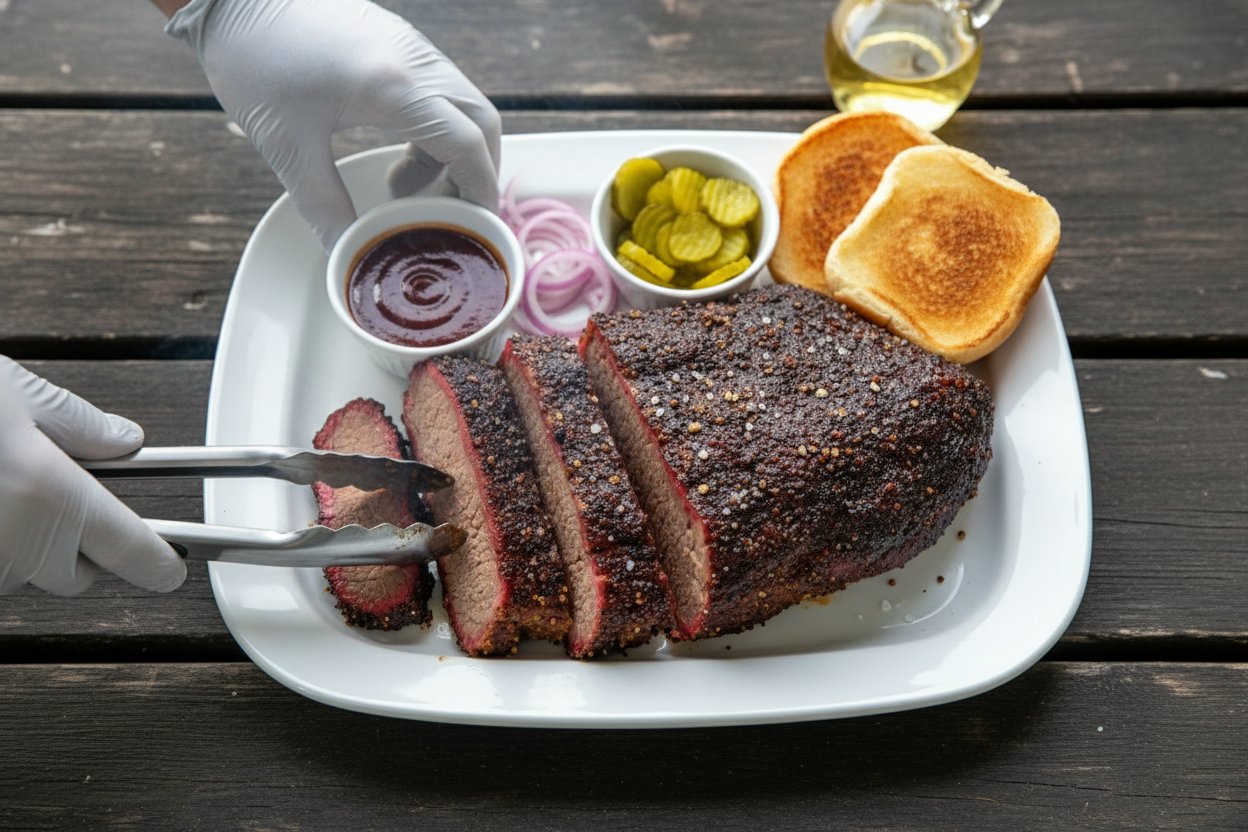
I love mine on a simple bun with pickles. The tangy crunch is perfect with the rich meat. Do you prefer sandwiches or a big pile of slices on your plate?
Share your brisket stories with me. I’d love to hear about your kitchen adventures. What’s the first big thing you ever tried to cook?
Ingredients:
| Ingredient | Amount | Notes |
|---|---|---|
| whole packer brisket (with fat cap) | 5–6 pounds | |
| kosher salt | 2 tablespoons | |
| coarsely ground black pepper | 2 tablespoons | |
| smoked paprika | 1 tablespoon | |
| garlic powder | 1 tablespoon | |
| onion powder | 1 tablespoon | |
| cayenne pepper | 1 teaspoon | optional |
| Wood chips or chunks | hickory or oak preferred | |
| Water or apple cider vinegar | for maintaining smoker moisture | |
| BBQ sauce | optional | |
| Pickles and onions | for serving | |
| Buns or sliced bread | if making sandwiches |
My Backyard Brisket: A Story You Can Eat
Hello, dear. Pull up a chair. Let’s talk about brisket. Now, this isn’t a fast recipe. It’s a slow, smoky story. You write it with patience and woodsmoke. I learned from my grandpa, who was never in a hurry. He’d say, “Tessa, good things take the time they take.” Isn’t that the truth? The smell will make your whole neighborhood hungry. I still laugh at that. So, let’s begin our story. We’ll make a memory, and a mighty fine dinner.
Step 1: First, meet your brisket. It’s a big, beautiful cut of beef. We need to trim it a little. Leave a thin blanket of fat on top. This keeps it juicy. Trim off any hard, waxy fat bits. (My hard-learned tip: A sharp knife makes this safe and easy!).
Step 2: Now, let’s make the rub. Get a small bowl. Add the salt, pepper, and all those powders. Mix them with your fingers. Feel the textures. Doesn’t that smell amazing? This simple mix is magic. It creates a wonderful crust called “bark.”
Step 3: Pat your brisket very dry. Then, cover it with the rub. Press the spices into the meat like a hug. Let it sit for 30 minutes. This lets the flavors say hello. What do we call that flavorful crust? Share below!
Step 4: Get your smoker ready. Heat it to 225°F. That’s low and slow. Add your wood chips. I love hickory. Put a pan of water inside. This steam keeps our brisket from drying out. It’s like a cozy sauna for meat!
Step 5: Place the brisket inside, fat side up. Close the lid. Now, we wait. Every hour, spritz it with water. This adds moisture. Just peek quickly. We don’t want all the heat to escape. The waiting is the hardest part.
Step 6: After several hours, it will hit about 160°F. Wrap it tightly in butcher paper. This is called the “Texas Crutch.” It helps the meat get tender. Then, put it back in. Let it cook until it’s super soft.
Step 7: The brisket is done when it feels tender. A probe should slide in like butter. Take it out. Let it rest for a whole hour. This lets the juices settle. Slicing too soon is a sad mistake!
Step 8: Finally, slice it. Always cut against the grain. See those little lines in the meat? Slice across them. This makes every bite tender. Now, serve it up and watch the smiles.
Cook Time: 7–9 hours
Total Time: 9–10 hours (with rest)
Yield: 8–10 servings
Category: Main Course, BBQ
Three Twists for Your Next Brisket
Once you master the basic story, you can change the chapters. Here are three fun ideas. Try one next time. Cooking should always be an adventure, don’t you think?
Coffee & Cocoa Rub: Add a tablespoon of fine coffee grounds and cocoa powder to your rub. It adds a deep, rich flavor that’s not sweet, just wonderful.
Sweet & Sticky Glaze: An hour before it’s done, unwrap it. Brush on a mix of BBQ sauce, honey, and a splash of apple cider vinegar. Let it caramelize.
Fiesta Brisket Tacos: Skip the buns. Shred the smoked brisket. Serve it in warm corn tortillas with lime, cilantro, and diced onion. So good!
Which one would you try first? Comment below!
How to Serve Your Masterpiece
Now, a great brisket needs good friends on the plate. Keep the sides simple. You want the smoky meat to be the star. I have my favorites after all these years.
For sides, I always make creamy potato salad. A simple vinegary coleslaw is perfect too. It cuts through the richness. For serving, pile the slices on a big platter. Let everyone build their own sandwich.
What to drink? For the grown-ups, a cold brown ale pairs beautifully. For everyone, homemade lemonade with a sprig of mint is just right. Which would you choose tonight?
Keeping Your Brisket Tasty for Later
Let’s talk about keeping your brisket delicious. First, let it cool completely. Then, slice what you’ll eat soon. Wrap those slices tightly in foil. They will be good in the fridge for four days.
For the freezer, wrap whole chunks in foil and plastic. I once froze a whole brisket flat. It was a lifesaver for a busy week! Thaw it in the fridge overnight when you’re ready.
Reheating is easy. Add a splash of broth to a pan. Warm the slices on low heat. This keeps the meat tender and juicy. Batch cooking means future meals are ready fast.
This matters because good food shouldn’t be wasted. A planned meal brings peace on a hectic day. Have you ever tried storing it this way? Share below!
Simple Fixes for Common Brisket Hiccups
Is your brisket tough? It probably needed more time. Cook until it feels tender, not just a certain temperature. I remember when my first brisket was like leather. Patience is the secret ingredient.
Is the outside bark too dark or bitter? Your fire might be too hot. Keep that smoker temperature low and steady. Spritzing with water helps calm the heat too.
Is the meat dry? You might have sliced it wrong. Always cut against the grain. See those lines in the meat? Slice right across them. This makes every bite tender.
Fixing these issues builds your cooking confidence. It also makes the flavor incredible. Good BBQ is about feeling, not just following rules. Which of these problems have you run into before?
Your Brisket Questions, Answered
Q: Can I make this gluten-free? A: Yes! The rub is naturally gluten-free. Just check your BBQ sauce label if you use it.
Q: Can I make it ahead? A: Absolutely. Smoke it a day early. Rest it, slice it, and refrigerate. Reheat gently as I mentioned.
Q: What if I don’t have paprika? A: You can use more black pepper. The simple salt and pepper rub is a classic Texas style.
Q: Can I make a smaller brisket? A: You can! A smaller piece will cook faster. Just keep checking the temperature for tenderness.
Q: Is the cayenne necessary? A: Not at all. It just adds a little warmth. Leave it out for a milder flavor everyone will love. Which tip will you try first?
My Kitchen Table is Always Open
I hope you give this brisket a try. It brings people together around the table. That is my favorite thing about cooking.
*Fun fact: The “low and slow” method breaks down tough meat fibers. This turns a hard-working muscle into a tender feast!*
I would love to see your creation. Share a photo of your smoky masterpiece. Have you tried this recipe? Tag us on Pinterest! Let’s build a community of happy cooks.
Happy cooking!
—Tessa Hammond.
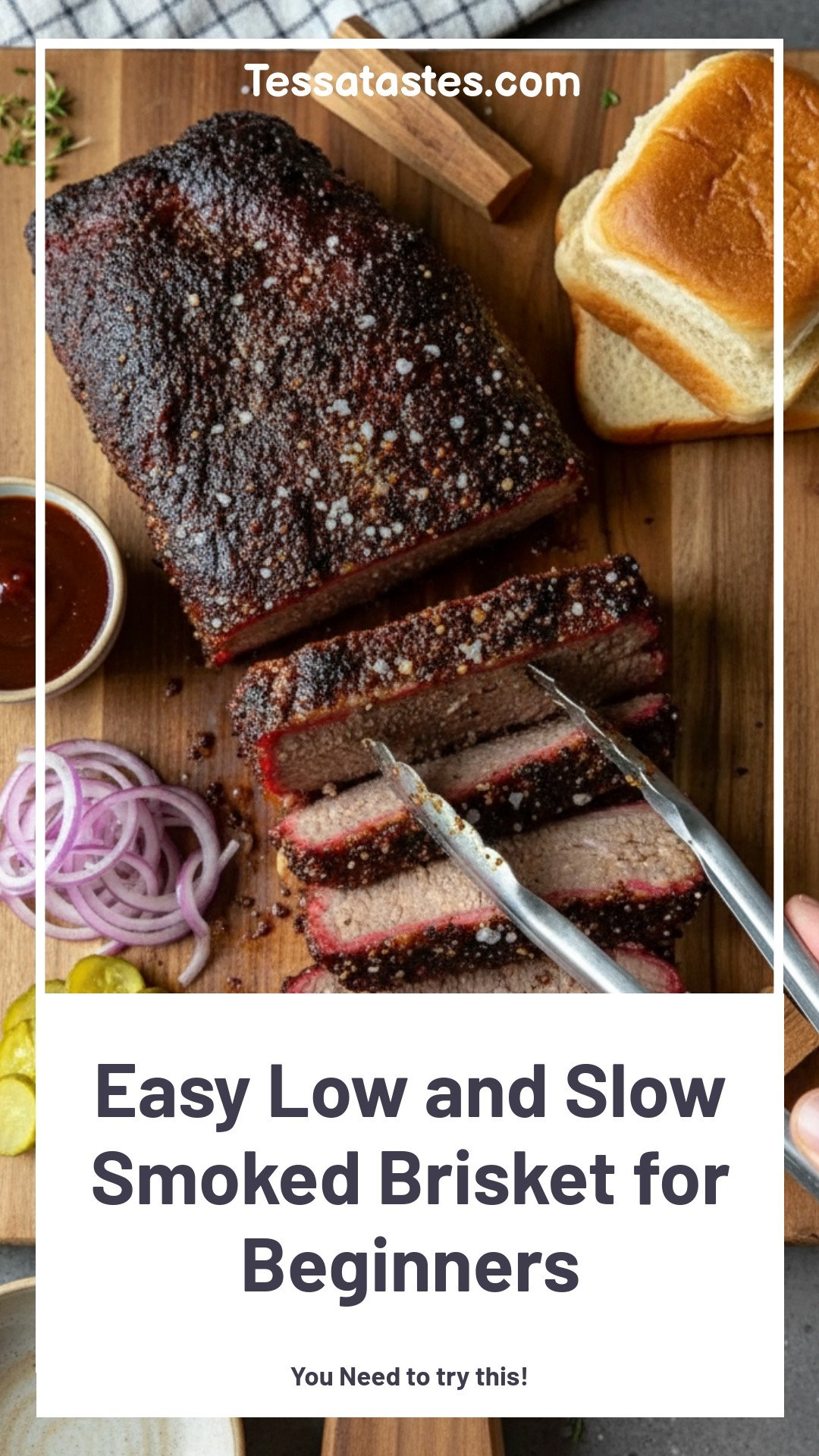
Easy Low and Slow Smoked Brisket for Beginners
Description
A simple, step-by-step guide to making a perfectly tender and flavorful smoked brisket, ideal for first-time BBQ enthusiasts.
Ingredients
Instructions
- Trim excess fat from the brisket, leaving about 1/4 inch of fat cap intact and removing silver skin or hard fat pockets (10-15 minutes).
- In a small bowl, combine kosher salt, black pepper, smoked paprika, garlic powder, onion powder, and cayenne pepper if using; mix well.
- Pat the brisket dry with paper towels and generously apply the rub all over the meat, pressing it into the surface. Let rest at room temperature for 30 minutes.
- Preheat the smoker to 225°F (107°C). Add wood chips or chunks to the firebox or smoker box. Place a drip pan underneath the brisket and fill with water or apple cider vinegar to maintain moisture (20-30 minutes).
- Place the brisket fat side up on the smoker rack. Smoke undisturbed for 4-5 hours at 225°F, spritzing every hour with water or apple cider vinegar to keep moist.
- When internal temperature reaches about 160°F (71°C), wrap the brisket tightly in butcher paper or aluminum foil and continue smoking for another 3-4 hours.
- Monitor internal temperature until it reaches 195-205°F (90-96°C) and the meat feels tender when poked.
- Remove the brisket from the smoker and let it rest wrapped for at least 1 hour at room temperature.
- Slice the brisket against the grain into 1/4-inch thick slices and serve with BBQ sauce, pickles, and buns or bread.
Notes
- For best results, use a reliable meat thermometer. The brisket is done when it probes tender, not just at a specific temperature. Resting is crucial for juicy meat.

Leave a Reply